Monday, 26 August 2013

Live from Olympic Camp - "Concussions" with Mike Richards

As I mentioned in my first post, I hope to pursue an extra year in sports medicine following my family medicine residency. Concussions are a particular area of interest for me, especially given that they are so common these days and we don't learn much about them during medical school. Athletes in hockey, football, boxing all have the unfortunate experience of concussions. Mike Richards of the LA Kings is no stranger to that. Here's what he has to say all the way from Calgary Olympic Camp:

Me: When was your first concussion?
Mike: I was 18

Me: How many concussions have you had?
Mike: Three officially on the book. I had one that wasn't considered a concussion, but I still missed games with some symptoms.

Me: Describe the immediate feeling of a concussion. What are the symptoms you experience in the days following?
Mike: Usually nothing right away, then after a min or two I've gotten blurred vision out of 1 or both eyes. One of the times I forgot a part of the play and tried to describe it, but missed a part.

Me: Did your subsequent concussions feel the same, better or worse?
Mike: They all felt about the same in terms of symptoms. My last one wasn't as severe a my 2 prior, but I still had the same symptoms.

Me: How do they evaluate you for concussions during a game? After the game?
Mike: Right when you get a head injury, you have to go to what is called the "quiet room". They run you through several memory tests and tests on how you feel. Then the doctor usually makes the call as to whether you can play. If it is questionable as to whether you should go back or not, you and the doctor decide what is best. If you go back and play, you re-evaluate the symptoms after the game.

Me: How do they evaluate you in order to decide that you are ready to play again?
Mike: You have to go through exercise with no symptoms and then you have to do a baseline test to see if you are back to the same results in the test you've done at a prior time.

Me: What's your advice to people struggling to get back to play following a concussion?
Mike: There's really nothing you can do to improve a concussion other than rest. It just takes time.

~ Exit Mike ~

But what exactly is a concussion?
A concussion is also termed a mild traumatic brain injury - basically, it results from a force that causes a brain "contusion" (aka bruise) as well as axonal (nerve component) damage.

The most common symptoms are confusion and amnesia. Occasionally, people experience loss of consciousness, but more often they have altered levels of consciousness.

The most recent tool used to assess concussions is the SCAT3. A link to this form is available here:
http://www.cattonline.com/scat

Patients should NOT return to play on the same day as their injury, nor should they return until they are symptom free. A return to play followed by a second concussion too soon can lead to life-threatening brain swelling.

Patients whose symptoms persist should eventually undergo head CT.

Overall, concussions are serious and shouldn't be taken lightly. Athletes, don't push it too hard!

Hope you learned a bit about concussions and thanks to Mike for the interview! Share your stories with us here...


Mike Richards - enjoying the ocean view in "Calgary".

Sunday, 25 August 2013

You are what you eat


It is one thing to say ‘start eating healthy’ to a patient, and a totally different thing whether the patient understands what that means. I have heard some interesting "healthy eating" strategies. For example, having peanut butter and banana smoothies for breakfast, lunch and dinner (not healthy or likely to result in weight loss). I have heard even more excuses as to why a patient is not eating healthy. For example being on the road or not knowing how to cook.

As a family doctor I think it is important to take the time to counsel patients on healthy eating.  Some physicians get their patients to make food diaries – and then make frequent follow ups to debrief and see how they are doing. Since a bad diet increases an individuals chance of acquiring chronic diseases – ie high blood pressure and diabetes (just to name a few) – there is definitely merit in encouraging good eating habits. 

Here are some general healthy eating tips that I may discuss with patients:

-BMI (body mass index) is a good place to start to determine what your goal weight may be. Calculate your BMI here. Normal is between 18.5 to 24.9.
-Take it slow. You do not want to lose 10 pounds in your first week – that is just not healthy. The optimal rate of weight loss is 1-2 lbs/week
-Fad diets do not work to KEEP the weight off. You need the right balance of nutrients –Canada’s Food Guide is a good place to start. Print it out and put it on your fridge.
-PORTION CONTROL. PORTION CONTROL. PORTION CONTROL. After finishing a plate of food instead of going straight back for seconds have a glass of water (or red wine). It may take a second for your brain to remind you that you are actually full.
-Minimize sugary food and drinks (and alcohol).
-Remember keeping weight off is a lifestyle change that takes perseverance.

Trip to the Calgary Farmer's Market today - some delicious fresh blueberries...
and as a treat Vanilla Bean and Salted Caramel Ice Cream (made by marcus)
YUMMY :)!

Friday, 23 August 2013

Stress: You vs Yourself

Okayyyy so for today’s post I’m going to write about stress/anxiety...

I consider myself a pretty outgoing, confident person who really tries not to let stress or anxiety get to me too much. However, I do have to say that medical school has been a whole different “ball game” so to speak. Being away from my family in an atmosphere where everyone is “buggin’ out” in Grenadian terms (aka uber stressed) can start to get to really anyone.  As for anxiety, I can admit that I’ve definitely experienced that put-on-the-spot jittery feeling, with a racing heart, a red face, complete with the voice cracks of a teenage boy... the feeling that makes you really just want to crawl in a hole and hide. My point is: everyone gets stressed and everyone gets anxiety on different levels (even when you think you're invincible).

I definitely started to let stress get the best of me a few months ago and I want everyone to know that it's very possible to turn things around. I had never experienced any anxiety in my life, so I didn’t really know what was going on when it started. When people used to say that they were having the worst anxiety and that they needed to sit down or something, I’d pretty much shrug it off and say “you’re fine, there’s nothing wrong with you”.  However, karma nipped me in the butt when I too started to experience my own anxiety. My anxiety got so bad that it was to the point where I’d sit at my desk and my heart would just start racing. Then I’d feel a sense of vertigo and just wanted to get out of the library as fast as I could. I tried to blame it on too much coffee, or poor eating habits, or not enough sleep etc. I even at one point thought I had a cardiomyopathy ha (as most med students know, the more info we learn, the more things we try to diagnose ourselves with outrageous things). I started to feel anxious even when I had stopped drinking caffeine. I’ve never been claustrophobic at all, and even simply getting in the back seat of a car started to make me anxious. I felt like I was losing complete control, thinking of any reason under the sun for what could be causing these feelings.  Finally, I came to terms with the fact I, the person who could drink 4 cups of coffee and a red bull a day and feel perfectly fine, had a problem with anxiety.

The next step was now what? Basically, I learned that anxiety is very common in students living away from family, in a setting such as medical school with overwhelming stress, and it even has some genetic factors; my sister Lindsey and I always joke about how our faces turn red when we’re caught off guard, or how our voices both crack if we’re put on the spot and we literally are like-geeze this is soo embarrassing. But anyways, in short, fixing anxiety has to do with the way you think and approach situations. Here are some tips that I think are very useful:

1. Imagine yourself in a situation that makes you anxious over and over until the thought of the situation doesn't bother you anymore 

2. Get rid of black and white thinking and mix in some grey. ie. “oh crap, I’m in a situation that makes me anxious, now I’m going to get anxious, I can feel my heart racing ahh”. That would be the black. The white would be not feeling anxious at all, possibly by avoiding the situation in general. Now go for grey thinking- this situation will probably make me anxious, but it’s likely that I’ll live through it and it won’t be that bad.  

3. Make goals to conquer your fears! 

4. Eliminate avoidance. Avoidance just perpetuates anxiety. 

5. Learn to breathe! Try to breath from your diaphragm and through your nose at a slower rate to help calm yourself down.


Thats all for now!
#happyfriday #nostress

-Carling 


Clinic Attire - Friday


Given that the weekend is upon us, I always get a little dressed up for clinic on Fridays. And while I am by no means a "fashionista", I do know a thing or two about how to incorporate my regular wardrobe into a clinic outfit. In my personal opinion, there is absolutely nothing wrong with dressing in any way for work as long as you look respectable.

Here are the rules I've set for myself:

- no one should be able to see your bum (even if you are bending over)
- no one should be able to see your breasts (even if you are leaning forward)
- you can show your legs and a tiny bit of thigh (as long as patients aren't offended by their occasional furriness)
- never forget your sweater (or you'll freeze to death)

I promised myself that I would never be one of those people who posts pics of themselves in the mirror with the hashtag #ootd, but personally I am running out of ideas on how else to show you my outfit.

So, here goes nothin'. Cheers to Friday!

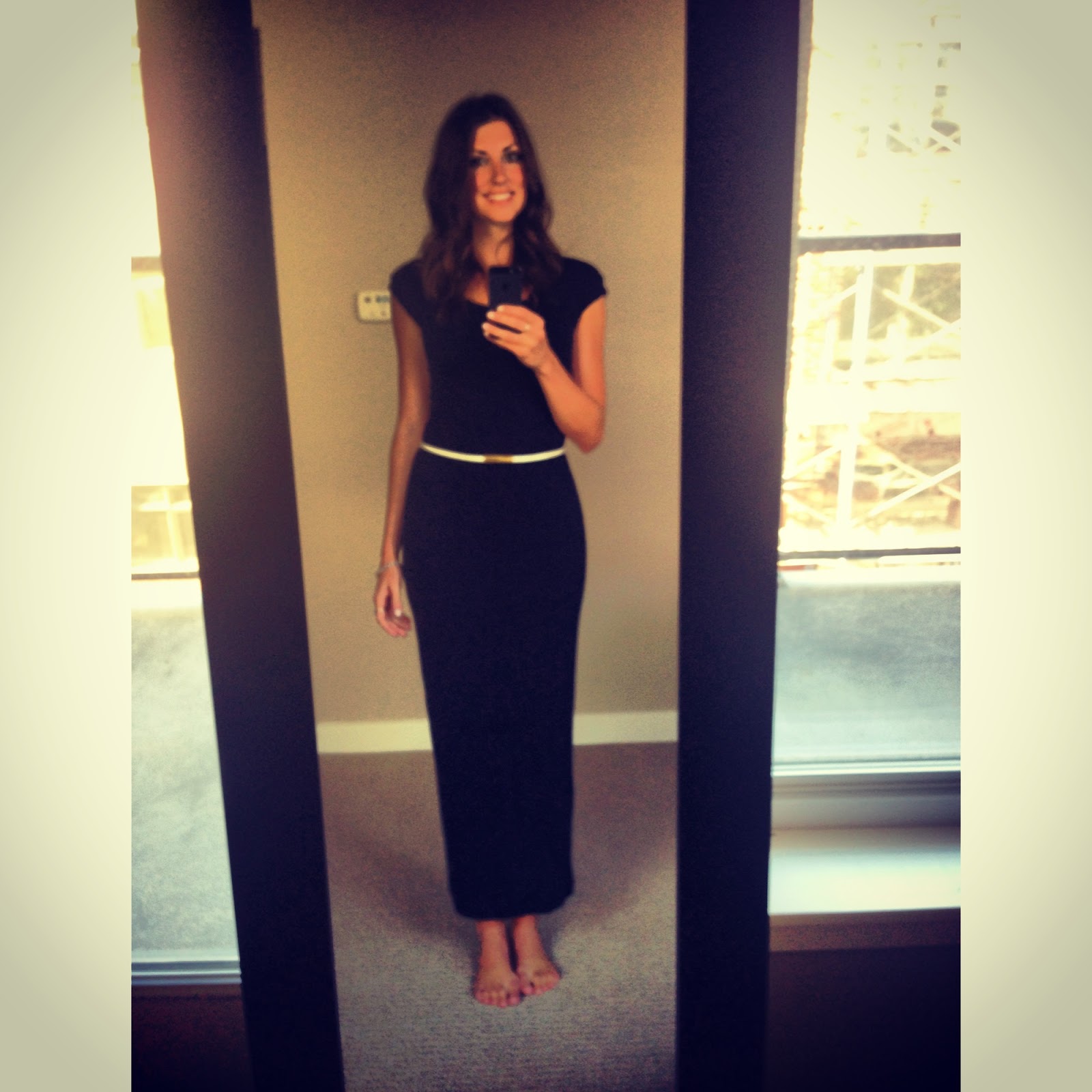
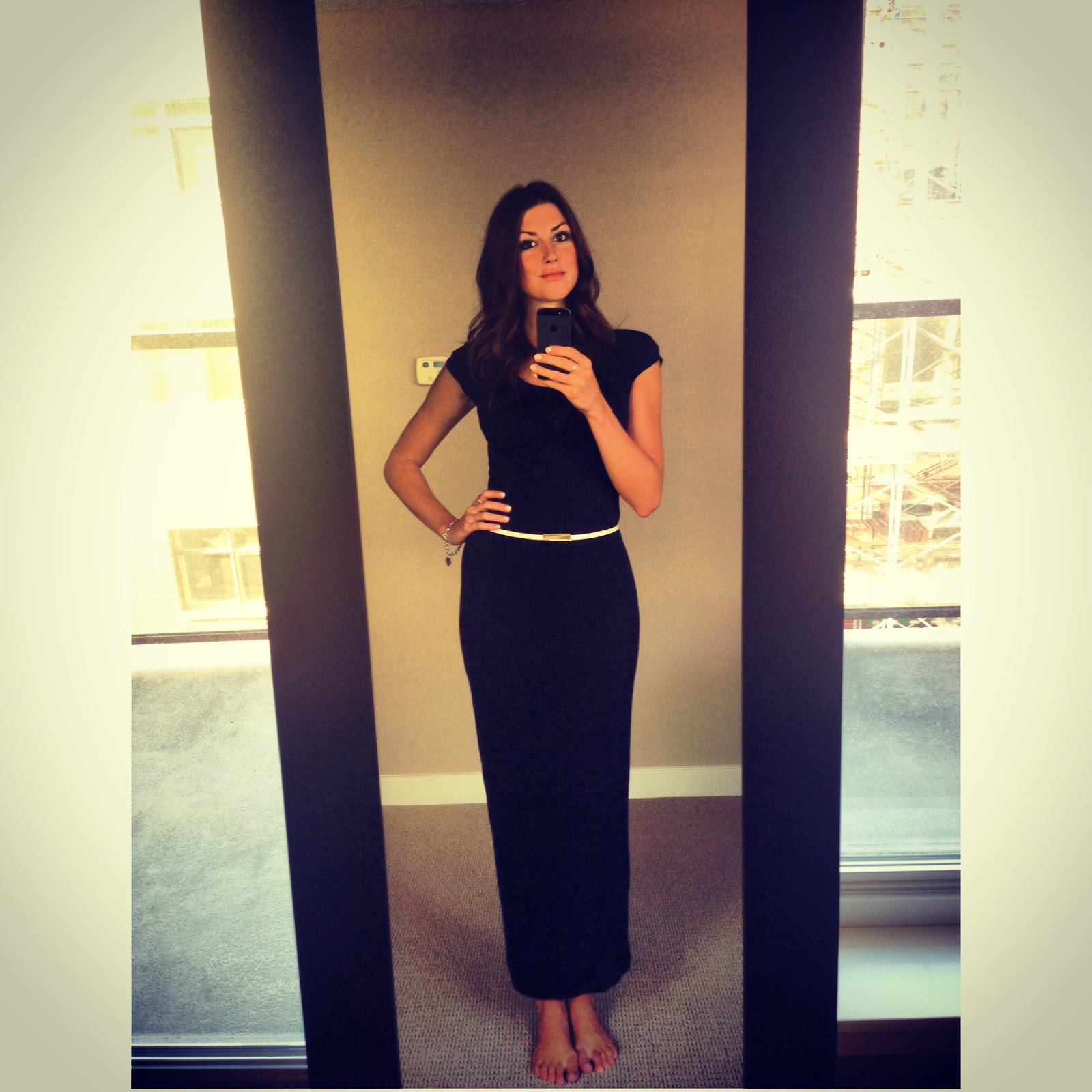
Club Monaco navy maxi dress with white and gold belt. Bare feet. #ootd


Tuesday, 20 August 2013

Quitting is HARD.

 Below is a photo of my best friend, Vanessa. I received a text from her two days ago that made my day. She’s decided to quit smoking. I can’t even count the number of times I have harped on her about how bad smoking is. In the end though, smokers need to be motivated to quit if it’s actually going to happen!

Why quit?

Smoking affects your health in many ways…most notably, it is associated with COPD, heart attacks and vascular disease. Smoking is the leading cause of preventable deaths!!

What are some ways you can help yourself to quit?

1) Set a quit date. On that day, make sure you have disposed of everything in your house that is associated with cigarettes.
2) Get your friends and family on board. If people aren’t supporting you, the process just becomes more difficult.
3) Try to avoid smokers.
4) Use quit aids: electronic cigarettes, Nicorette, Champix
5) Don’t let yourself have just one…one leads to two and so on.

We know that 10 years after you quit smoking, your risk of lung cancer returns to that of a nonsmoker.
So start now!

Back to Vanessa. Let’s poll the audience. Before or after? This babe has the nonsmoker look down pat. I hope she knows we’re behind her :)

Tuesday, 13 August 2013

Top 5 #TIG moments

Island living definitely comes with it's perks but there's also some pretty standard "This is Grenada" moments that students have come to term #TIG 

Over my last year and a half here I've definitely had many #TIG moments, but here's a few to share with you...

5. Twice in one week, both on the morning of exams, my 1997 Escudo with no a/c won't start...only option? Start running and arrive drenched in sweat. 

4. I never have time to blow dry my hair, especially didn't during 4th term- SOLUTION: quick dry under the hand dryers in the library bathroom. Works like a charm. It comes with a lot of stares tho...I'll never care ha. 

3. There's often a herd of goats crossing the sidewalk during my run, with a 12 year old boy following behind them, playing his cell phone of course. One time I actually ran into him solo, and he goes "hey, have you seen my goats?".

2. When your simulation patient from Clinical Skills lab turns out to also be the proctor yelling at me to put my hair back during my exam the next week. Or... for example, your cab driver could also be your mechanic who could also be a security guard. 

1. During exam time the island often runs dry of sugar free red bull and 5 hour energy. I often get texts being like "heads up! New York Bagels got sugar free bull again, HURRY."

Here's a link to a song that a few of my friends made while living on the island. The lyrics are awesome and definitely capture what our life is like here. 


Cheers,
-Carling 

Monday, 12 August 2013

On Call: The Skinny

I spent the weekend on call and was astonished at how many of my friends are still asking me,  "So what does that mean exactly?" So for anyone who has family members or friends in medicine, here is a quick educational piece for you.

On call means we are:
- on the verge of tears
- considering changing careers
- falling asleep standing
- easily agitated
- lonely as heck while everyone we know is at the cabin
- missing our nightly glass of wine

Ok, so maybe that's just how call makes me feel. But in all reality, here are some definitions:
- being on call means you are responsible for new admissions and patients on your ward in the hospital
- In-house call: this means you are not allowed to leave the hospital; in this case you are allowed a post-call day, where you get to leave after rounds the next morning (unless you're in a hardcore surgical specialty and don't require sleep)
- Home call: this means you are at home and will get called in for anything you need to deal with; in this case, you do not get a post call day unless you spend a certain number of hours in the hospital per night
- Call frequency is much greater in specialties like internal medicine, surgical specialties, obstetrics and gynecology, and pediatrics
- Thankfully for my sanity, call is much less frequent in family medicine. Although we do rotate through the above specialties too!

Hope that clarifies things for everyone who was sitting at home racking their brain trying to understand what I was doing all weekend.


Exercise

Well, I'm back on the island for my last term here; it's crazy how a year and a half has flown by... Today, I wanted to post about the importance of exercise. I know being a med student is physically and emotionally draining, but seriously, the key to staying sane is having some "me" time!

Don't say you don't have time, you can ALWAYS find the time. Set rules for yourself, such as- I'll take 30 mins a day away from the books to exercise or do some sort of physical activity. I definitely think it's essential to surviving the grind of school. 

I personally go for a run everyday around the same time. It's somewhat of a ritual to me, a time were I get to clear my head and just focus on myself. I've found on days that I've skipped a run, that I'm lethargic and more tired than usual. I also really enjoy doing short intense workouts from the website: http://www.bodyrock.tv/. They're usually around 12 mins and are definitely quick and get right to it.  

That's all for now, happy grinding!

-Carling 


Friday, 9 August 2013

Top 5 Embarrassing Clinical Moments

It is Friday, and we thought it would be a good idea to keep up the Friday Top 5s.

Except this week it is at our expense.

So it would be great if every clinical encounter with a patient went smoothly. Unfortunately it does not always work that way. Maybe it is the lack of sleep, or possibly the mind-boggling amounts of information we have to know, but some visits just get a little awkward.  Here are a few of our embarrassing patient encounters…

5) While getting frustrated with a computer that did not seem to be working, my 70 year old patient suggested it may work better if I turn it on.

4) In the midst of a pap test, I asked the woman if she had ever been told where her cervix was hiding.

3) While performing an abdominal exam on an attractive male patient he asked if I was blushing, I subsequently turned beet red, tried to laugh it off, and then snorted.

2) Instead of asking my preceptor where the lubricant was prior to performing a DRE (digital rectal exam), I asked him for KY Jelly.

1) In medical school I misheard an elderly 90 year old patient with a strong accent. I thought he was saying he was worried about 'his orgasms' instead of 'his organs.' I subsequently started taking a sexual history, until I was stopped by the doctor observing me when he realized my mistake. Least to say it was a good lesson - always clarify your patient's concerns. 

Have a good weekend everyone!

Let us know your embarrassing clinical experiences - share them below.

Wednesday, 7 August 2013

Motivation for Wednesday!

I recently saw this quote by Jason Sudeikis in relation to his weight loss since he started dating Olivia Wilde: 

"The truth is, I’m not getting up an hour earlier and walking on a treadmill. I have the greatest workout partner in the world. And you don’t need a gym membership for that kind of workout."

I'll admit, I scoffed at it at first. However, I've had to counsel more and more patients on the benefit of exercise and weight loss and while doing some reading, I came across this: 

Calories burned during sex: 110-150

Wow! 150? 

Okay...so that's not actually that many. And I commend you and your partner if you're having sex for an hour. 

But now that I have your attention...

Physical inactivity is a HUGE problem worldwide.  But why do we need to exercise? Well, besides the obvious benefit of a nice waistline and being a lot more physically attractive, there are major health benefits! Physical activity is associated with decreased risk of coronary heart disease, certain types of cancer, stroke, and death from any cause. Feeling stressed? Exercise may decrease stress and anxiety and can even delay cognitive decline in older adults.

How much exercise should you be doing?

The MINIMUM recommended amount of exercise is 150 minutes of moderate activity per week, 75 minutes per week of vigoroous activity or some combination of the two.

Who has time for that?

My advice for patients is try to incorporate this into your daily life: walk or bike to work, take the stairs, do squats while you're brushing your teeth if you have to. And break it up! It doesn't all have to be at once.

My challenge: record your activities per week. 
See if you're meeting the recommendations!

Amazingly, my sister is a workout guru (as her abs will tell you) and promises to post some exciting workouts on this page.

Hope you're feeling motivated on hump day!


Wednesday, 31 July 2013

The Calgary Transition

When CaRMS (Canadian Resident Matching Service) told me I was going to Calgary I was excited. I was going to a new bigger city, I would be close to the mountains, I would be moving in with one of my best friends, and the Family Medicine program was exactly what I wanted. I had grown up, gone to high school, undergrad and medical school in Winnipeg. I thought, and still believe it was a good time for a change, but moving can be overwhelming. When I first arrived we were evacuated from my friend's apartment because of the devastating Alberta floods. The hospital that I was to be working at was closed, and the Mission area that I had remembered from my last visit was shut down indefinitely. It was all a lot to take in - starting a new program, being displaced...

I was lucky enough to stay at another friends place during the flood. Everyone in Calgary was extremely accommodating, and willing to lend a helping hand. I was able to finally unpack my bag, the clinic I worked at reopened, and I began to feel a little more settled.

Transitioning to new city can be hard, I think a lot of people may find change uncomfortable or intimidating. Change is important, it helps you grow, and I think especially as a doctor it is important to remain flexible when things do not go exactly as planned. So here is how I made the transition to a new city that much easier. Take it slow. Go home more often at the beginning of a move (if you can). You appreciate those things you may have taken for granted before. Meet awesome people. I have been lucky to meet some amazing new friends through my program. Take time to find a new place. Discover new areas, determine what the rental market is like, find your niche. Enjoy your job, and find a mentor. For me this will be important to have a mentor who provides advice about practice management, and guide me through the residency process. Plan trips home or away. Travel is very important, and planning to discover new (or old) places gives me something to get excited about. Do the things you love. For me going out for dinner, travelling, being active (more to come on all of these things later).

Hopefully in the future my posts will be a little shorter! I will be writing about everything from cooking to travel to medicine. Enjoy!

Carolyn


Monday, 29 July 2013

Caribbean Med School say whaaaa???

YES, I go to a caribbean med school, St. George's University in Grenada, to be exact. I get a lot of questions and statements about it, for example the standard would be: what is it like to go there? Must be nice to be on a beach all day. Do you actually do work? How do you feel about it? To answer all of the prior with a few simple words- If I had to do it over, I wouldn't change at thing. I've met life long friends from all over and I wouldn't trade it for anything. I like to describe it as "med school camp". You're surrounded by the same people within a very small radius, while all pursing the same goals. Yes, at times you feel like you're trapped on an island, because you literally are, but I think the experiences I've had have helped me develop skills that will further help me in my career. 

From day one, St. George's University makes you aware of hard work that is ahead of you; the curriculum immediately begins to direct you towards the next major step in your medical career, the USMLE board exams. SGU teaches you that your classmates are not your competition, but could possibly be your future colleagues, who should be used as an additional resource, helping one another out along the way.  From my experience, the closeness in space with your friends, all with the same goals, has taught me the importance building a dynamic relationship of friendship/colleague- to push each other along the way, emotionally support each other and to help everyone work to their utmost potential. A value cannot be placed on having close friends to ask a question, quiz each other, and to talk concepts out when you're too tired to read anymore. 

In summary, no, I don't go to the beach everyday. Yes, it is hard work. Yes, it can be emotionally draining at times. Would I change it if I had to do it over again? Not a chance. 

-Carling

Sunday, 28 July 2013

Integrative Medicine

The more patients I see in clinic, the more I realize that not everyone is looking for a "medication" to treat their illness. Many patients are interested in herbal remedies, yoga, meditation, acupuncture, and other alternatives to conventional Western medicine.

While we briefly touch on some of these therapies during medical school, I don't currently feel confident expressing opinions on many of these treatments to my patients who are asking about them. Hence, when we were asked during our orientation to residency whether or not we would like to participate in an extra two year online course in Integrative Medicine (through the University of Arizona), I was obviously intrigued. I signed up for the course, and completed my first session on my laptop out at my cabin in Minaki, Ontario this morning. Part of the module was a self-assessment, which heightened my awareness of my knowledge gap (which I hope to close) in this area.

For anyone who is interested, I can't wait to share some of the evidence based knowledge I hope to gain during this course!

Lindsey

Friday, 26 July 2013

Welcome to our blog!

We hope to enlighten you with interesting experiences we have encountered while undergoing our training on the road to becoming doctors.

Meet my best friend Carolyn:

Born an raised in Anola, Manitoba, she received her MD from the University of Manitoba, alongside moi. She is now out in Calgary (much to my dismay) completing her Family Medicine residency, with hopes of doing an extra year of training in Dermatology.

My sister Carling:

This girl doesn't like convention. That's why she escaped the harsh Winnipeg climate and took off to the Caribbean for her medical training. Grenada has turned out to be quite the amazing place, with an awesome curriculum, that seems to allow for some beach time as well. Carling has finished 4 out of 5 terms out there and after her next term, she heads to New York for her hospital rotations.

And then there's me:

During my last year of medicine, I decided to pursue a residency in Radiology. Well, sometimes things don't work out as planned; I have found myself enjoying Family Medicine in Manitoba instead, with my eye on an extra year in Sports Medicine! As my dad would say, "Serendipity".


We all have many interests outside of medicine and while we don't quite know where this blog will take us, we will soon find out ;)

Lindsey